
roofing

H = healthy
Is the material safe?
C = conscious
Is the material sustainable?
D = durable
Will the material last?
Materials we actively promote.


Materials we like to use.

Materials we use.

Materials we try to avoid.

Materials we advocate against.
shingle & tile
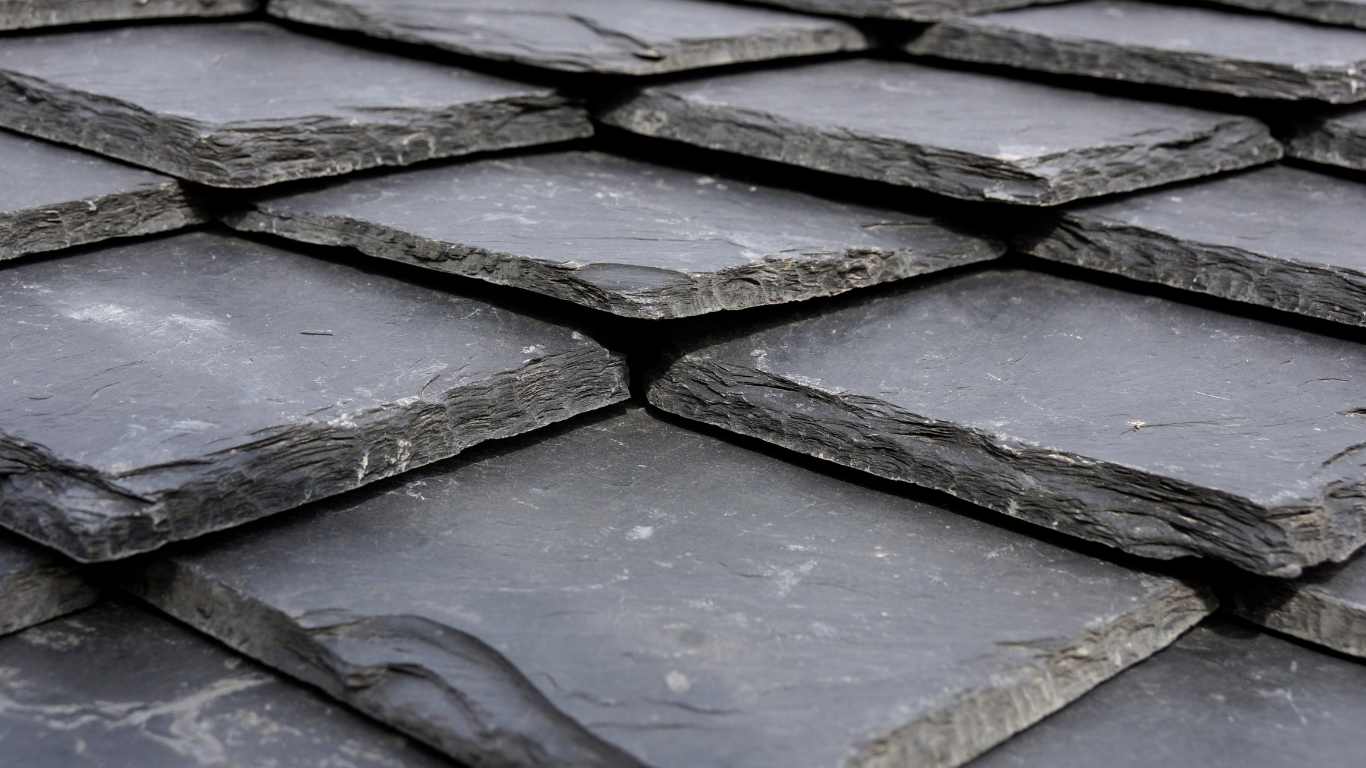
Shingle roofing consists of individual thin elements installed in an overlapping, staggered pattern to create a waterproof barrier. Shingles can be made from asphalt, wood, metal and composite materials. Tile roofing consists of thick and heavy interlocking pieces that can be flat, curved, or barrel-shaped which are secured to a solid substrate. Common tile options include clay, concrete, slate, composite, and solar.
metal / copper, zinc
H — Runoff especially with copper can leach into nearby ecosystems, no health concerns to workers or occupants, appropriate for a healthy home.
C — Reflective metals help reduce solar gain through roofs, fully recyclable, can be made with recycled material, extraction of virgin material is energy intensive, mining may have significant ecological impacts.
D — Highly durable with a long lifespan, fire-resistant, corrosion-resistant, prone to scratches or denting from impact, copper shingles will patina, lifespan 60 - 80+ years.
solar
H — Production uses heavy metals & solvents which can pose a concern for workers, composed of tempered glass, silicon, & metal which are inert after production.
C — Electricity produced can offset energy-intensive production with proper installation in appropriate climates, recycling is difficult, requires proper disposal to avoid leaching heavy metals.
D — Complex to install, are not easy to repair, may not be easily adaptable to all roof designs, does not have a long history of use, lifespan 20 - 30 years.

metal / steel
H — Dependent on coating type, workers may experience exposure to heavy metals & chemicals during processing, production of Kynar (PVDF) involves toxic chemicals including PFAS.
C — Steel itself is readily recyclable & can be produced with recycled material, production of coatings may leach chemical & heavy metals into environment around processing facilities.
D — Corrosion resistance & durability varies based on type of coating, not suitable for coastal environments, good balance between upfront costs & life expectancy, lifespan 30 - 50 years.
wood / cedar, redwood
H — Natural product that is often infused with preservative treatments which can leach chemicals into groundwater.
C — Biodegradable, sustainability varies on sourcing, can be sourced locally in PNW, higher quality products are sourced from old-growth trees & are not appropriate for a conscious home.
D — Durability dependent on species, thickness, & quality, aesthetically pleasing, susceptibility to damage from moss & rot, long history of use, requires regular maintenance, lifespan 30 - 50 years.
concrete
H — Low impacts from leaching, workers may be exposed to silica dust during installation which can cause respiratory issues.
C — Energy-intensive production, not biodegradable, can be produced with recycled content, end-of-life options include being crushed for use as aggregate in new building products.
D — More impact resistant than clay tiles, need to be sealed to prevent moisture absorption & cracking, less expensive than other heavy roofing materials like clay or slate tile, lifespan 60 - 100 years.

composite
H — Composed of plastics & synthetic rubbers, VOCs emitted during production, considered inert after production, proper protection required during cutting which releases plastic particles.
C — Not recyclable or biodegradable, often produced from recycled materials, lower impact compared to asphalt shingles due to linger lifespan & use of recycled content.
D — Higher durability compare to asphalt shingles, resistant to rot, wind uplift, ultraviolet damage, fire-resistant, designed to look like a slate tiles or cedar shakes, lifespan 40 - 50 years.
asphalt / premium
H — Petroleum-based, production emits VOCs & other pollutants impacting air quality surrounding manufacturing plants, contains PAHs & heavy metals, not appropriate for rainwater collection.
C — Non-renewable, not biodegradable, difficult to recycle, can be down-cycled into other products, absorbs more heat than metal or light colored membrane roofs, production emits carbon dioxide.
D — More durable & longer-lasting option compared to 3-Tab asphalt shingles, susceptible to angle or moss growth in humid climates, vulnerable to extreme weather, lifespan up to 50 years.

asphalt / standard (3-Tab)
H — Petroleum-based, similar impacts to premium asphalt shingles, shingles can leach toxins into groundwater aquifers, not appropriate for rainwater collection.
C — Large contributor to landfill waste, difficult to recycle, energy-intensive production, some products available with partly recycled content, not appropriate for a conscious home.
D — Affordable, wide color range, readily available & commonly installed, degrade under extreme temperatures, high-winds, or strong UV radiation, easy to repair, typical lifespan 15 - 25 years.

slate
H — Non-toxic, does not release harmful chemicals into the environment, does not contain VOCs, appropriate for a healthy home.
C — Made from renewable materials, recyclable, firing of kilns during production is energy intensive, end of life options include being reused, down-cycled, integrated into other materials, or disposed in landfills.
D — Resistant to pest, insects, rot, mold & algae, fire-resistant, costly to repair, brittle, long history of use, can last for generations, weight needs to be accounted for in roof structure design, lifespan 100 - 200+ years.
clay
H — Natural materials, does not release harmful chemicals, safe for installers, appropriate for a healthy home.
C — Natural stone product that is fully recyclable, no damaging end-of-life concerns, impacts from extraction processes can vary, appropriate for a conscious home.
D — Long-lasting, resistant to pest, insects, rot, mold & algae, resistant to corrosion, brittle and can be damaged by high-impact stressors, weight needs to be accounted for in roof structure design, lifespan 60 - 100+ years.
panel
Panel roofing consists of large, prefabricated sheets with overlapping corrugations or interlocking seams designed to cover large areas with fewer joints than shingle or tile roofs. Panels are available in varying lengths and widths and can be made from metal, polycarbonate, fiberglass, and PVC.
metal / stainless steelick
H — Chromium and nickel used in stainless steel remain stable and do not leach, does not require paints or other surface treatments which often have health concerns.
C — Fully recyclable with no loss in quality, reflective surface reduces heat absorption, high upfront embodied energy in production, potential impacts from mining raw materials.
D — High resistance to rust & corrosion, strong & impact-resistant, less prone to denting than aluminum or zinc, appropriate for industrial or marine environments, lifespan 100+ years.
metal / copper, zinc
H — Naturally resistant to corrosion by forming a protective patina that eliminates the need for coatings or paints, not appropriate for rainwater harvesting unless filtered.
C — Fully recyclable with no loss in quality, low embodied energy relative to lifespan, leaching copper particles can damage ecosystems and aquatic life, heavy metal contamination & deforestation concerns from mining.
D — Natural patina does not require regular maintenance, important to use appropriate fasteners to avoid galvanic corrosion, lifespan 100 - 150+ years.
metal / aluminum
H — Generally safe and non-toxic, no significant health risks during installation, runoff safe in most cases when uncoated, coatings vary in composition & health concerns.
C — Virgin material is energy intensive to produce, smelting creates perfluorocarbons (PFCs), highly recyclable without loss of quality, often produced with a high recycled content, high solar reflectance minimizing heat absorption.
D — Lightweight, mailable, corrosion-resistant, oxidizes to form a protective film, no edge creep, appropriate for coastal environments, soft & susceptible to denting or impact damage, lifespan 50 - 70 years.
metal / steel coated (Galvalume® or Zincalume®)
H — Metal alloy coating containing zinc, aluminum, & silicone, toxic heavy metals, gases & sludge are by-products of the production process.
C — Concerns with zinc runoff, mining impacts reduced relative to longer lifespan, aluminum oxidized layer reduces zinc leaching compared to galvanized steel, recyclable.
D — Superior corrosion resistance over galvanized, use appropriate materials to avoid galvanic corrosion, self-healing with reduced edge rust creep, limited color options, choose thicker AZ55 over AZ50, lifespan 40 - 60 years.
metal / steel coated (Kynar®, Hylar®)
H — Polyvinylidene fluoride (PVDF) coating applied over metal-coated substrate, low-VOC & stable once applied, health concerns with transportation & production chemicals used in production.
C — Petroleum-derived, energy-intensive production, deduced waste due to increased lifespan, coating must be removed before recycling, PVDF is a forever chemical & will not biodegrade.
D — Strong carbon-fluorine bonds resist fading & chalking, holds up to temperature fluctuations, UV, & humidity, susceptible to abrasion, variety of color options, lifespan 30 - 50 years.
metal / steel galvanized
H — Metal coating containing zinc, toxic by-products from production processing, associated health risk with cutting, welding, or grinding galvanized metal.
C — Can contribute to zinc runoff contaminating groundwater & aquatic ecosystems, exacerbated in acidic or coastal environments,
D — Zinc provides moderate corrosion resistance, higher percentages of zinc yield better resistance, choose thicker G90 over thinner G60, lifespan 20 - 40 years.
metal / steel painted
H — Polyester coating applied to steel roofing, processes produces VOCs & other pollutants including formaldehyde & phthalates, generation of fumes or dust poses a health concern for workers.
C — Petroleum-based coating, does not reflect as much heat as other finishes, recyclable, uses less energy in production than metal coating options, improper disposal of polyester generates toxic fumes.
D — Cost-effective option, provides moderate resistance to weathering, UV, & corrosion, not suitable for harsh environments or coastal regions, paint can fade & peel over time, lifespan 20 - 30 years.
polycarbonate (PC)
H — High light transmittance, stable & chemically inert after production, cutting produces a fine dust which should not be inhaled.
C — Petroleum-based, lower carbon footprint compared to PVC, difficult to recycle, not biodegradable, stable with limited leaching into landfills.
D — Strong, affordable, versatile, dimensionally stable, impact-resistant, shatterproof, holds up very well to rain, snow, & hail, built-in UV stabilizers can reduce sun fading, susceptible to scratching, lifespan 10 - 20 years.
fiberglass (FRP)
H — Polyester resin reinforced with fiberglass, risk of skin irritation or respiratory issues if inhaled, prolonged exposure could lead to chronic issues.
C — Energy intensive to produce, emits styrene during manufacturing impacting the surrounding air quality, difficult to recycle, not biodegradable, often ends up in landfills.
D — Less impact-resistant than polycarbonate, susceptible to cracking or warping under prolonged stress, prone to surface degradation, prone to yellowing with prolonged sun exposure, lifespan 10 - 30 years.
polyvinyl chloride (PVC)
H — Susceptible for release of harmful chemicals including dioxins during production & disposal, protection should be taken to prevent inhalation of dust during cutting.
C — Petroleum-based, contains chlorine & plasticizers that are susceptible to leaching, releases toxic gases if burned, limited recycling options, not appropriate for a conscious home.
D — High strength to weight ratio, resistant to fire, wind, moisture, corrosion, & many chemicals, low maintenance, brittle in low temperatures, lifespan 20 - 30 years.
membrane
Membrane roofing refers to a continuous waterproof system made of flexible materials often used in low-slope roof applications where other roofing types may not provide adequate water drainage and in applications for living ro green roofs. Membrane roofing systems include TPO, EPDM, PVC, and modified bitumen.
living / extensive
H — Provides visual green space, pollinator & wildlife habitat, typically not designed for access or amenity space, appropriate for a healthy home.
C — Cooling benefits, reduces energy consumption, provides stormwater management potential, reduces heat-island effect.
D — Soil medium depth 6" or less, low maintenance depending on plant selection, protects roofing membrane & building envelope, difficult to repair if damaged or not installed correctly, lifespan 20 - 30 years.
thermoplastic polyolefin (TPO)
H — Reinforced single-ply blend of polypropylene & ethylene, does not contain chlorine, phthalates, heavy metals, or halogenated compounds, seams are thermally welded without solvents, fewer hazardous chemicals compared to PVC.
C — May be mechanically fastened, ballasted or chemically adhered, does not biodegrade, light colors reflect sunlight, fully recyclable, fewer petroleum-based additives compared to EPDM.
D — Puncture resistant, can be remolded to address cracks or leaks, handles expansion, less durable than EPDM in some climates, available in multiple colors, chemical formula has been modified over time so history of use is unknown.
ethylene propylene diene monomer (EPDM)
H — Synthetic rubber composed of ethylene & propylene, seams are adhered through adhesives, uses fewer hazardous chemicals compared to PVC.
C — Derived from fossil fuels, high embodied energy, dark colors absorb heat rather than repel solar radiation, partially recyclable into secondary applications, often disposed into landfills.
D — May be mechanically fastened, ballasted, or chemically adhered, high durability, resistant to UV, ozone & abrasion, dark color hides buildup of grime, susceptible to shrinkage over time.
polyvinyl chloride (PVC)
H — Contains chlorine & other additives, dioxins (bioaccumulative & endocrine-disrupting chemicals) & VOCs are released during manufacturing, health concerns for workers and residence near manufacturing facilities.
C — Reflects UV rays rather than absorbing them, energy intensive production, produces harmful emissions if incinerated, possible to recycle but rare in practice, not appropriate for a conscious home.
D — One of the stronger low slope options, durabile & versatile, resistant to fire, chemicals, & UV radiation, long life expectancy, excellent thermal performance.
modified bitumen (MBR) / standard (3-Tab)
H — Asphalt-based emulsion with polyester or fiberglass reinforcing fabric, both torch-applied & adhesive-applied expose installers to bitumens & fumes, not appropriate for a healthy home.
C — Typically disposed into landfills, requires additional coating to reflect solar energy, recycling is rare, most roofs are disposed in landfills, not appropriate for a conscious home.
D — Can be installed in multiple layers, good leak resistance, UV and heat reflective; easily patched, does not hold up well to standing water, can withstand temperature fluctuations.
living / intensive
H — Biophilic design elements reduce stress & anxiety, natural areas provide aesthetic benefits, meditative spaces, and habitat for native plants and wildlife, appropriate for a healthy home.
C — Provides significant insulation, reduces energy consumption, can accommodate larger plants & trees, high albedo by reflecting UV light, increased water retention, improves air quality, reduces heat-island effect.
D — Deeper soil medium up to several feet, structural considerations especially w/ deeper depths, requires regular maintenance, protects roofing membrane & building envelope increasing building lifespan, lifespan 40 - 50+ years.